About the Journal
The TERECONET Newsletter is a quarterly publication by the TESOL Research Collaboration Network, dedicated to advancing research and practice in language education and applied linguistics through research stories. Our newsletter serves as a vibrant platform for educators, researchers, and early-career scholars to share practical research knowledge, reflect on their learning experiences, and showcase the latest developments in language education.
Each issue features a variety of article types—including research tips, reflections, discussions, applications, and reviews—curated to empower readers with actionable insights and foster a collaborative research community. Whether you are seeking innovative classroom strategies or deeper perspectives on TESOL research, the TERECONET Newsletter connects you with a global network of expertise and inspiration.
Stay informed and inspired—explore our latest issues and join the conversation!
Current Issue
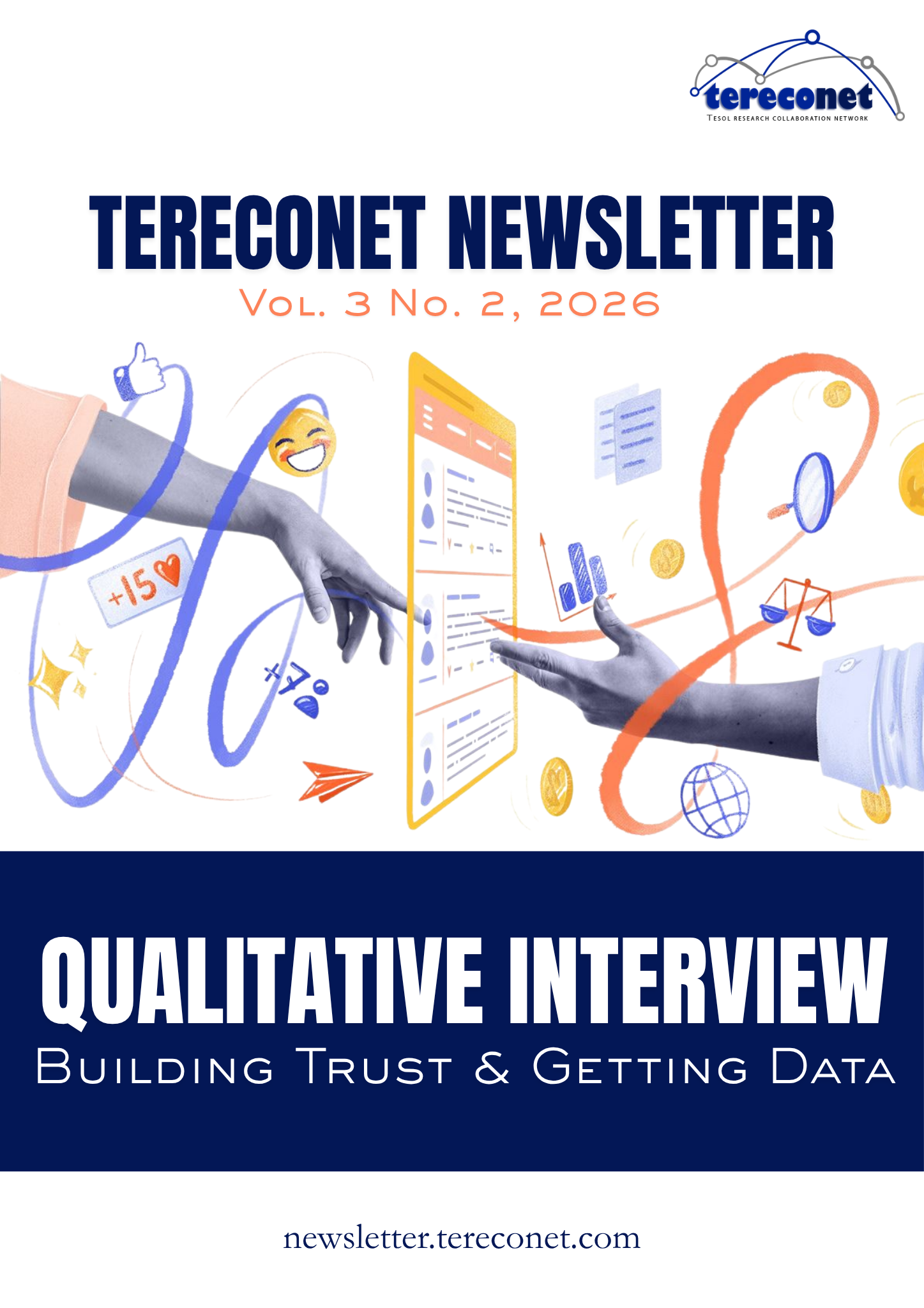
In TESOL and applied linguistics, we often turn to qualitative interviews to illuminate the lived experiences that shape learning and teaching. Yet anyone who has ever sat across or next to participants knows that generating meaningful interview data is far from a methodological choice. Indeed, it is a craft that demands relational sensitivity, ethical judgment, and the ability to create space where trust, clarity, and authenticity can emerge.
In this issue, we explore the art and discipline of qualitative interviewing as a core practice for educators who conduct research within their own professional communities. The contributions gathered here highlight the sophisticated skills required to navigate rapport building, alignment, reflexivity, interviewer positioning, and culturally responsive engagement.